
Remembering the 1936 Flood in Amesbury
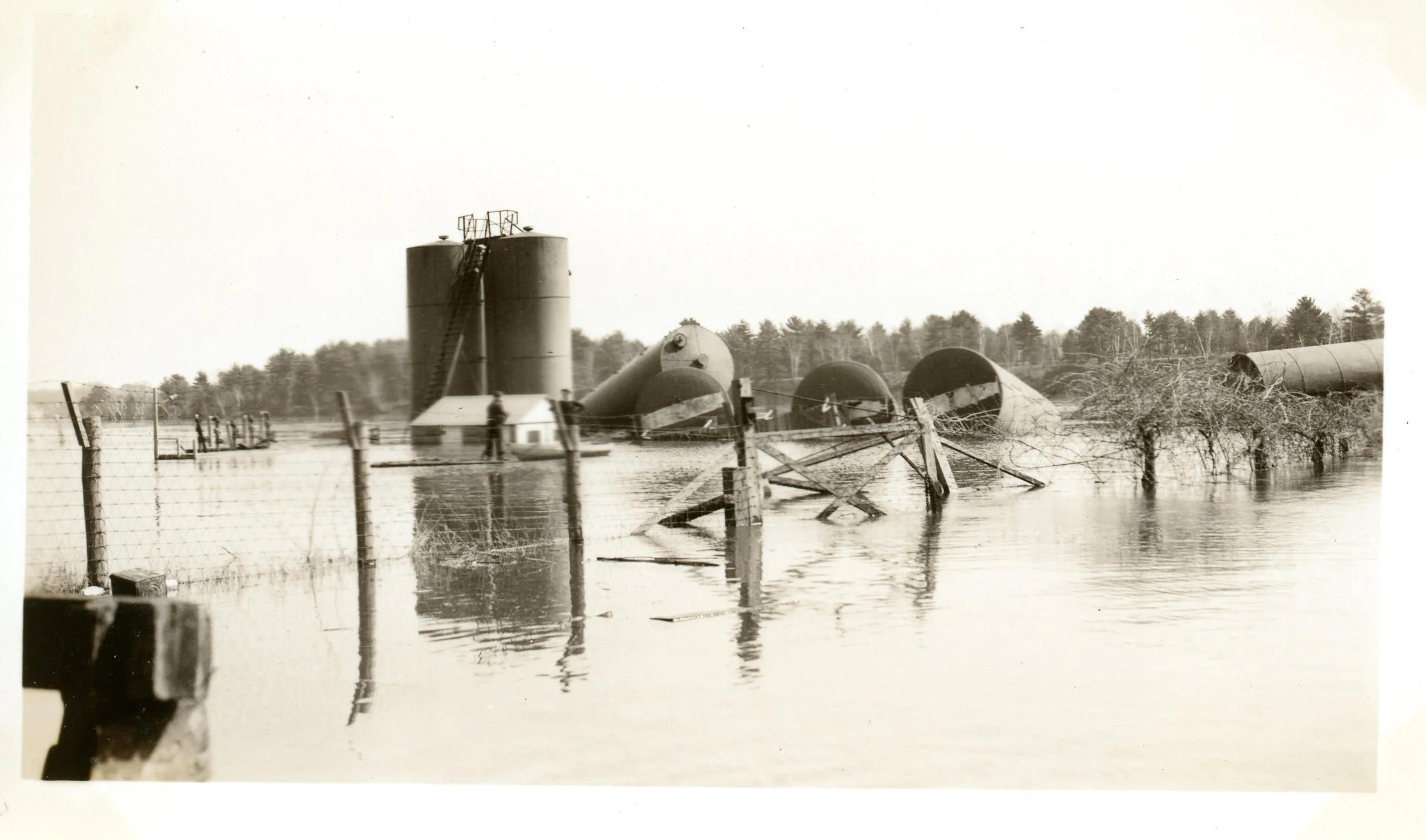
On March 27, 1936, a grim headline on the front page of the Amesbury Times declared that “Amesbury was visited by the most devastating flood within the memory of man”. Riverside communities from Maine to Pennsylvania experienced widespread damage. The destruction of infrastructure in the flood-ravaged Northeast resulted in rail and telegraph disruptions beyond the region. The losses in hard‑hit towns and cities exceeded millions.
In Amesbury, waters from the Merrimack, Powow and Back Rivers rose rapidly, flooding streets, filling basements of homes and businesses, and displacing residents. The rising waters stirred fears of disease, stemming from exposure to contaminated water.
The flood halted work for at least two days in factories owned by Louis Shoe, Crystal Shoe, and Merrimac Hat. Gas stations and shops on Elm Street were inundated with floodwater. Meanwhile, businesses on higher ground yielded profits from residents in need of supplies, and visitors who were unable to leave the area.
Amesbury escaped without fatalities or lasting damage to infrastructure. The extent of the damage in town was estimated to be $200,000. A writer with the Amesbury Times aimed to downplay the impact, claiming the $200,000 valuation was an exaggeration. (The 1936 sum of $200,000 would be equivalent to more than $4.6 million today, according to the Federal Reserve Bank of Minneapolis.) Residential areas along Point Shore and Pleasant Valley experienced the most significant flooding in town; but even in those neighborhoods, residents realized they had been spared the worst of the disaster.
At Black Rocks, debris had traveled from points upstream, including furniture and dead animals. Authorities, in an act of public health, forbade residents from attempting to collect any flotsam.
The impact of the flood grew in devastation as you moved north along the Merrimack. In nearby Haverhill, damage totaled $1,000,000, and in Lowell, a staggering $8,000,000. In Manchester, NH, thousands of workers living in Millyard tenements were displaced, and the already struggling Amoskeag Manufacturing Company would not recover.
As the waters receded, locals made their way in and out of Point Shore aboard wooden dories, and were able to see the high‑water marks on homes and barns — stains that would etch the event into memory. In the following days, WPA workers pumped basements and scraped roads. The Red Cross set up clinics, inoculating crews and affected residents against the typhoid toxin. Soon, life returned to normal for most of the residents of Amesbury, but the recollection of the flood would be carried on for generations.
Research contributed by ACM staff member Melissa Kaiser. Compiled from reports published in the Amesbury Daily News and Amesbury Times between March 12 and April 3rd accessed through Amesbury Public Library’s digital archives.
